Know Before You Go
#1 Venue - transportation from the airport
Fastest and easiest route into central Bucharest
Option 1 — Airport train to Gara de Nord (recommended)
From the arrivals terminal, follow signs for the train (“Tren”). The airport rail stop is Aeroport Henri Coandă T1 (Otopeni).The train goes directly to Gara de Nord, Bucharest’s main railway station, every ~40 minutes, and the trip takes about 20–25 minutes.From Gara de Nord, you can:
● take the Metro (M1 or M4),
● order a Bolt/Uber,
● or continue on foot/public transport depending on your destination.
Typical city-center areas from Gara de Nord:
● Old Town / Lipscani: ~10–15 min by Uber/Bolt
● Piața Universității: ~10 min by Metro
● Piața Romană: ~10–15 min by Metro
● Old Town Boutique Hotel (Old Town): 10-15 min by Uber/Bolt ; 15-20 min by Metro
● Moxy Bucharest Hotel (Old Town): 15-20 min by Uber/Bolt ; 20-25 min by Metro
Option 2 - Bolt or Uber directly from the airport
This is the most comfortable option if:● you arrive late at night,
● have lots of luggage,
● or are traveling in a group.
Use the official pickup zones outside arrivals and order through the app after landing.
Ride-sharing is widely used in Bucharest and generally preferred over random street taxis.
Option 3 - Official airport taxis
If you want a taxi, use only:● the official airport taxi ordering terminals/kiosks inside arrivals,
● or taxis dispatched from the designated airport taxi area.
Avoid unsolicited drivers approaching passengers inside the terminal as these rides can cost substantially more.
Public transport and taxis
In Bucharest:● Metro ticket machines generally accept cards.
● Many buses/trams support contactless tap payment directly onboard.
● Ride-sharing apps like Bolt and Uber: work very well and support in-app card payments.
Most modern taxis also accept cards, but it is smart to ask before starting the ride if you intend to pay by card.
#2 Payment method
In Romania, card payments are extremely common in cities and tourist areas. You can expect to pay by card at:● supermarkets,
● restaurants and cafés,
● malls,
● hotels,
● ride-sharing apps,
● most taxis,
● Metro ticket machines,
● many convenience stores.
Cash is still useful for:
● small kiosks,
● some markets,
● rural areas,
● older neighborhood shops,
● or very small businesses.
What card brands work?
The two dominant networks are Visa, Mastercard. These are accepted almost everywhere cards are accepted.
American Express is much less common. Some hotels or international chains may accept it, but many smaller businesses do not because of higher processing fees. It would be advised to ask beforehand if you plan on using AMEX.
Contactless (“tap to pay”)
Romania is heavily contactless-oriented. In practice:● tap-to-pay cards are standard,
● nearly all modern terminals support NFC/contactless,
● paying by phone or smartwatch is normal.
Romanian banks widely support:
● Apple Pay
● Google Wallet
● Samsung Pay
● Garmin Pay
● Fitbit Pay
● Xiaomi Pay
Major Romanian banks publicly support these services.
Apple Pay / Google Pay limitations
For visitors, the main rule is simple:If your physical Visa or Mastercard works internationally, Apple Pay / Google Wallet usually works too anywhere contactless payments are accepted.
A few practical notes:
● Your phone must support NFC.
● Your bank must allow Apple Pay or Google Wallet for your card.
● Some older terminals may ask for PIN after several transactions.
● Small merchants occasionally have unstable terminals or temporary connectivity issues.
#3 Exchange
Best places to check accurate exchange ratesFor the “real” market rate (“mid-market” rate), the most commonly used references are: Google Currency Converter National Bank of Romania (BNR) official rates https://www.bnr.ro/541-cursul-de-schimb .
The BNR rate is the official benchmark banks use in Romania.
Should you exchange money at the airport?
Usually: no, except for a very small emergency amount.
Airport exchange offices in Otopeni are convenient, but rates are often significantly worse than:
● bank ATMs,
● city exchange offices,
● or card payments.
A good strategy is:
● exchange only enough for immediate needs if necessary,
● then use an ATM or exchange office in the city.
Best practical advice for travelers
1. Paying by card is usually the best option
In Bucharest especially, Visa/Mastercard + Apple Pay/Google Wallet work almost everywhere. You may barely need cash at all.
2. If you need cash, use a bank ATM
This is usually the safest and fairest method. Recommended Romanian bank ATMs include: Banca Transilvania, ING, BRD, Raiffeisen, BCR
Bank ATMs generally give better exchange rates than airport booths.
Important: always choose RON (local currency)
This is the single most important travel money tip. When paying by card, withdrawing from an ATM or using Apple Pay/Google Pay the machine may ask: “Charge in EUR/USD/your home currency?”.
Always choose: “Charge in RON”. This avoids “Dynamic Currency Conversion” (DCC), which often adds a bad exchange rate and hidden markup.
Exchange offices (“Casa de schimb”)
Romania has many exchange offices in Bucharest.
Good practice:
● compare the displayed buy/sell rates,
● verify there is no commission,
● avoid tiny tourist-trap booths near stations or heavily touristy streets.
Exchange offices inside malls or established companies are generally safer.
Revolut / Wise / multi-currency cards
These work very well in Romania and are widely used by travelers and locals alike.
They are often among the cheapest ways to convert money, pay in RON or withdraw cash.
Simple recommendation for most visitors:
● Use card payments whenever possible.
● Withdraw a small amount of RON from a bank ATM after arriving.
● Avoid exchanging large sums at the airport.
#4 Electronics - power outlets/socket types in Romania
For those of you travelling from outside EU and UK, please be advised that the electrical system may be different than what you have in your home country. In Romania, the standard electrical system is:● Voltage: 230V
● Frequency: 50Hz
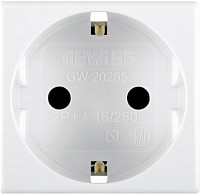
● Plug types: Type C and Type F
Outlet type:
Travelers from these regions usually need an adapter
● United States / Canada / Mexico
● United Kingdom / Ireland
● Australia / New Zealand
● some Asian and Middle Eastern countries
Voltage compatibility matters
Romania uses 230V, which is higher than the 110–120V used in countries like the US and Canada.
Most modern devices are fine: phones, laptops, tablets, camera chargers.
Visitors should check the label on their charger. If it says something like: “Input: 100–240V, 50/60Hz” then it works in Romania without a voltage converter.
#5 Access in ELI-NP
Location
ELI-NP is located in Măgurele, just outside Bucharest, approximately:30 minutes by car from central Bucharest
45–90 minutes by public transport, depending on traffic and connections
Address:
Reactorului Street 30, Măgurele, Ilfov County
Transportation tips
● Uber and Bolt work well from Bucharest.
● Public transport is possible but involves transfers.
● Ride-hailing is usually easier for first-time visitors.
IMPORTANT:
ACCESS INTO THE FACILITY GROUNDS IS PERMITTED ONLY WITH A PHYSICAL VALID ID (passport for foreign visitors, ID Card,”card de identitate”, being an alternative for romanian visitors)
#6 Using your mobile phone in Romania - Roaming and Mobile Data
If you don’t want to use your own mobile data while in Romania,it’s strongly recommended you get an e-sim.eSIMs work very well in Romania and are supported by the main mobile operators, including Orange Romania, Vodafone Romania, and Digi Romania
What travelers should know
● Most modern smartphones support eSIM:
- newer iPhones
- Google Pixel phones
- recent Samsung Galaxy models
● Visitors can use:
- an international travel eSIM (Airalo, Revolut, Holafly, etc.)
- or a local Romanian eSIM
● Installing an eSIM usually requires:
- Wi-Fi connection
- scanning a QR code
● It is best to set up the eSIM:
- before arriving
- or while connected to airport/hotel Wi-Fi
Coverage and mobile internet
Romania has:● very good 4G coverage
● widespread 5G in major cities
● generally fast and inexpensive mobile internet
#7 Weather in Romania
For visitors staying in Bucharest and Măgurele between 8–19 June 2026, you can expect early summer weather: generally warm, green, and pleasant, with long daylight hours — but also a fair chance of short thunderstorms in the afternoons or evenings.Măgurele is only a few kilometers southwest of Bucharest, so temperatures and conditions are usually almost identical, though Măgurele can feel slightly cooler at night and a bit breezier/open due to less dense urban development.
Typical Weather for 8–19 June
Daytime temperatures● Usually 24–30°C
● Most days are comfortably warm rather than extremely hot
● Heatwaves are possible, but sustained extreme heat is less common in mid-June than in July/August
Night temperatures
● Usually 13–18°C
● Evenings are often pleasant for walking outside
● A light jacket or hoodie is useful after sunset
What Visitors Should Pack
Recommended:● T-shirts and light summer clothes
● Comfortable walking shoes
● Sunglasses and sunscreen
● Small umbrella or light rain jacket
● One light sweater/hoodie for evenings
● Recent years in Romania have generally been warmer than historical averages, with increasingly frequent hot spells. Romania officially recorded 2024 as its hottest year on record.
● That means June 2026 could lean a bit warmer than older climate averages, especially during sunny periods. Still, mid-June is usually considered one of the more comfortable times to visit southern Romania before the stronger July heat arrives.

